|
重庆大学
首页
图书资源
视听资源
本馆讯息
读书活动
校本资源
全部图书资源
>
O 数理科学和化学
>
O6 化学
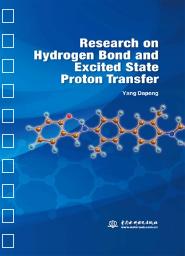
氢键和激发态质子转移研究
作者:杨大鹏著
出版社:中国水利水电出版社
出版日期:2018年06月
ISBN:978-7-5170-6551-7
中图分类:O641.2;O561.4 ( 数理科学和化学 > 化学 > 物理化学(理论化学)、化学物理学 )
纸质书参考价格:
¥5000
借阅次数:0
收藏人数:0
推荐次数:0
目录
封面
书名页
版权页
前言
目录页
Chapter 1 Introduction of Hydrogen Bond and Excited State Proton Transfer
1.1 Hydrogen Bond
1.2 Excited State Proton Transfer(ESPT)
References
Chapter 2 Theoretical Foundation of Computational Methods
2.1 Quantum Mechanics
2.2 Density Functional Theory
2.2.1 Brief Introduction of Density Functional Theory
2.2.2 Hohenberg-Kohn Theorem
2.2.3 Kohn-Sham Equation
2.2.4 Expression Form of Exchange Correlation Functional and Classification of Density Functionals
2.3 Time-dependent Density Functional Theory(TD-DFT)
2.3.1 Brief Introduction of TD-DFT
2.3.2 Runge-Gross Theorem
2.3.3 Linear-response TD-DFT
References
Chapter 3 ESIPT Mechanism of Phenylbenzimidazole Derivatized Fluorescent Sensor(L)in Different Solvents
3.1 Introduction
3.2 Computational Methods
3.3 Results and Discussions
3.3.1 Optimized Structures
3.3.2 Charge Distribution and Frontier Molecular Orbitals
3.3.3 Potential Energy Curves
3.4 Conclusions
References
Chapter 4 ESIPT Mechanism of a Highly Selective Fluorescent Chemosensor Based on 2-hydroxyphenylthiazole
4.1 Introduction
4.2 Computational Methods
4.3 Results and Discussions
4.3.1 Geometric Structures and IR Spectra
4.3.2 Electronic Spectra and MOs
4.3.3 The Potential Energy Curves
4.4 Conclusions
References
Chapter 5 Analogy Study on ESIPT Reaction of 3BHC Sensor Between Polar DMF and Non-polar Toluene
5.1 Introduction
5.2 Computational Methods
5.3 Results and Discussions
5.3.1 Optimized Structures,Electronic Spectra and Frontier Molecular Orbitals
5.3.2 AIM Theory and Mulliken's Charge Analyses
5.3.3 Potential Energy Curves
5.4 Conclusions
References
Chapter 6 Competitive Excited State Dynamical Process of 2,2'-((1E,1'E)-((3,3'-dimethyl-[1,1'-biphenyl]-4,4'-diyl)-bis(azanylylidene))bis(methanylylidene))-diphenol System
6.1 Introduction
6.2 Computational Methods
6.3 Results and Discussions
6.3.1 Structures
6.3.2 Frontier Molecular Orbitals and Charge Distributions
6.3.3 Potential Energy Surfaces
6.4 Conclusions
References
Chapter 7 Excited State Behaviour of Imide Compounds N-cyclohexyl-3-hydroxyphthalimide and 3,6-Dihydroxy-N-Cyclohexy-lphthalimide
7.1 Introduction
7.2 Computational Methods
7.3 Results and Discussions
7.3.1 Optimized Structures and Electronic Spectra
7.3.2 Infrared Vibrational Spectral Shift and Frontier Molecular Orbitals
7.3.3 Potential Energy Surfaces and Transition State
7.4 Conclusions
References
Chapter 8 Excited-state Proton Transfer Behaviors of 3H-MC and P2H-CH
8.1 Introduction
8.2 Computational Methods
8.3 Results and Discussions
8.3.1 Structure Analyses
8.3.2 Analyses of Spectra and Frontier Molecular Orbitals(MOs)
8.3.3 Mechanism Study
8.4 Conclusions
References
Chapter 9 Excited State Intermolecular Proton Transfer Mechanisms of 2-phenylimidazo[4,5-b]pyridine in Methanol Solvent
9.1 Introduction
9.2 Computational Methods
9.3 Results and Discussions
9.3.1 Analyses of Structures
9.3.2 Electronic Spectra and Charge Redistribution
9.3.3 Mechanism Analyses
9.4 Conclusions
References
Chapter 10 Excited State Behavior of 2-(phenyl)imidazo[4,5-c]pyridine in Methanol Solvent
10.1 Introduction
10.2 Computational Methods
10.3 Results and Discussions
10.3.1 Optimized Structures
10.3.2 Infrared Vibrational and Electronic Spectra
10.3.3 Frontier Molecular Orbitals
10.3.4 Potential Energy Curves
10.4 Conclusions
References
Chapter 11 Excited State Behavior of t-DMASIP-b Sensor
11.1 Introduction
11.2 Computational Methods
11.3 Results and Discussions
11.3.1 Optimized Structures
11.3.2 Infrared Vibrational and Electronic Spectra
11.3.3 Frontier Molecular Orbitals
11.3.4 Potential Energy Curves
11.4 Conclusions
References
封底
..更多
推荐图书
王阳明全集(第一部)
(明)王守仁
王阳明全集(第二部)
(明)王守仁
王阳明全集(第三部)
(明)王守仁
王阳明全集(第四部)
(明)王守仁
艺文类聚(第一部)
(唐)欧阳询
艺文类聚(第二部)
(唐)欧阳询
艺文类聚(第三部)
(唐)欧阳询
艺文类聚(第四部)
(唐)欧阳询
©中文在线
服务条款
|
关于我们
|
管理登录
返回顶部
用户指南
下载APP
关注我们